IDRS Consulting Political Intelligence & Campaign Advisory Log In
Service

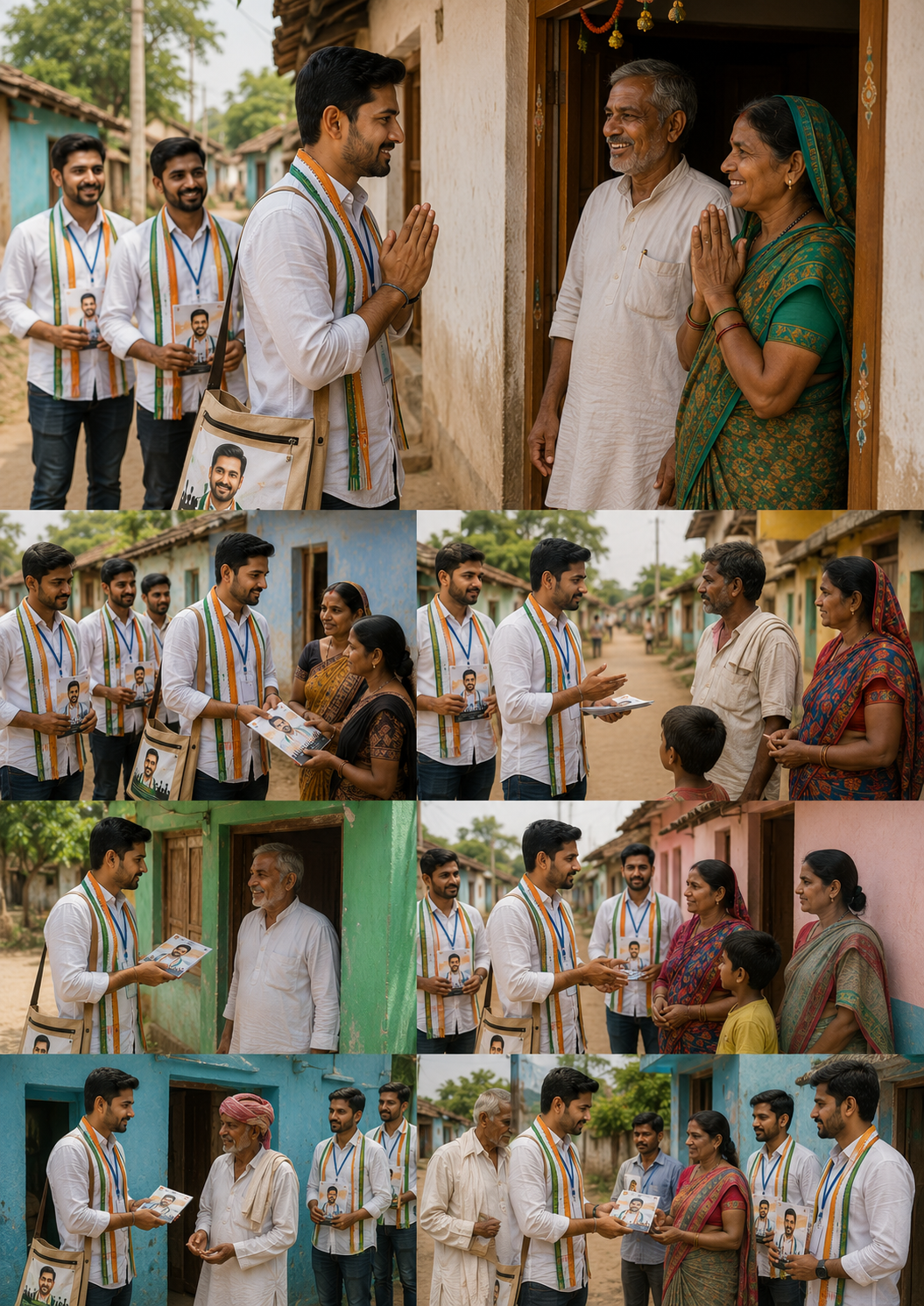
Door-to-Door Campaign

IDRS builds door-to-door election outreach programs that combine household visits, local messaging, contact capture, and field reporting so campaigns can improve persuasion, visibility, and follow-up booth by booth.

Household-level persuasion Booth-mapped field planning Tracked voter contact systems
ReachDoor teams move with route discipline so every visit adds coverage, not just noise.
RecordResponses, supporter tags, local issues, and revisit needs are captured for action.
ReinforceField contact connects with war room, PR, digital, and mobilization layers.
Indian voters and citizens gathered in a polling queue
Field persuasion Best used when campaigns need credibility, visibility, and a measurable contact program.
Useful for Assembly elections, parliamentary segments, municipal contests, and candidate image-building drives.
Overview

What this service actually delivers

Door-to-door campaigning works best when it is treated as a managed voter-contact system, not as a symbolic walk-through.

IDRS approach

Many campaigns still use door-to-door outreach only for optics. Teams walk through a neighborhood, distribute a leaflet, click photographs, and move on without knowing how many homes were actually covered, which households were supportive, and where resistance or confusion remains. That creates activity, but not always campaign advantage.

IDRS treats door-to-door outreach as a structured field instrument. We begin by identifying priority clusters, lane logic, local influencer pockets, and booth-linked micro-areas. We then align route design, volunteer strength, supervisor review, message scripts, and data capture so that every visit contributes to both persuasion and decision-making.

The result is not just more visible outreach. It is a repeatable system through which leadership can understand where household contact is strong, where the candidate needs reinforcement, which local issues are surfacing repeatedly, and which segments require a different message or second visit.

What the engagement includes

  • Area segmentation by booth, ward, village cluster, or urban pocket
  • Door visit scripts for candidate introduction, issue listening, and vote request
  • Printed material planning for letters, pledge cards, and local appeal sheets
  • Supporter and undecided household tagging for repeat contact
  • Supervisor reporting for daily coverage, exceptions, and missed areas
  • Coordination with war room, digital, PR, and mobilization teams
Metrics

How campaigns usually measure strong door outreach

Good field work becomes more valuable when the campaign can measure coverage, response quality, and follow-up readiness.

Households reached per day

Teams generally track how many homes each volunteer unit covers in a shift, how many were locked, and how many require repeat contact. This keeps performance grounded in real coverage, not estimated activity.

Supporter and undecided tagging

Strong programs separate persuaded households from soft supporters, undecideds, and resistance clusters so later communication becomes sharper and more cost-efficient.

Issue frequency and locality trends

Door outreach reveals recurring complaints, welfare gaps, candidate perception problems, and neighborhood-specific expectations that need a message or logistics response.

What success metrics often look like

Campaigns usually review coverage completion rate, average households touched per team, repeat-visit requirement percentage, undecided-household share, volunteer route completion discipline, literature distribution accuracy, and the number of voter contacts that convert into later rally attendance, call-center follow-up, WhatsApp list additions, or polling-day mobilization prospects.

In tightly contested seats, even small improvements in the quality of identified supporters, revisitable households, and locality-specific response patterns can influence the final weeks of campaign planning. That is why we emphasize not just activity volume, but action-ready field intelligence.

Where the numbers become useful

These metrics help leadership decide whether a segment needs another pass, whether candidate time should be shifted, whether local messaging is landing, and whether booth committees are converting campaign energy into actual voter contact. Door-to-door data is most useful when it feeds fast into planning instead of staying inside field diaries.

Process

How IDRS structures door-to-door drives

The strength of door-to-door work is not only in reaching homes, but in doing it with message clarity, route discipline, and reliable reporting.

01

Map

We break the geography into booth-linked routes, local clusters, volunteer capacity, and priority pockets.

02

Prepare

Teams receive message briefs, local issue points, material kits, and contact-marking instructions before deployment.

03

Visit

Household outreach is conducted with clear scripts, respectful engagement, and consistent daily coverage review.

04

Convert

Field responses are pushed into repeat visits, candidate planning, mobilization lists, and message correction loops.

State examples

How door-to-door strategy changes by region

Local campaign culture matters. The same outreach format does not work equally in every state or every contest type.

Uttar Pradesh assembly and parliamentary segments

In Uttar Pradesh, door outreach often needs booth-by-booth discipline, caste-aware language sensitivity, and sharper layering between village clusters, mohallas, and urban pockets. Candidate recognition may already be high, so the field task is often less about basic introduction and more about preference reinforcement, local issue listening, and turnout preparation.

Programs usually work best when household contact is tied to strong booth committees and repeat visits for undecided or fragmented social clusters. Messaging must remain localized and respectful, especially where rival networks are already active.

Bihar and eastern belt contests

In Bihar, local relationship density is often high, so the outreach model must feel personal rather than mechanical. Teams need better briefing on local influencers, panchayat dynamics, and which households require a known face rather than a generic volunteer. The campaign gains more from credibility and continuity than from only large outreach volume.

This is where disciplined supervisor feedback becomes important. If households are being touched without trust transfer, the campaign may appear active without actually deepening support.

Maharashtra urban-rural mixed seats

Maharashtra often requires a split model. Urban wards need apartment access strategy, structured literature drops, and issue-led conversation. Rural areas reward repeated personal presence, local organization coordination, and outreach tied to visible community anchors. Route planning becomes critical because travel time can reduce real contact productivity.

When campaigns adapt the outreach format to settlement type instead of forcing one method everywhere, the quality of voter contact usually improves sharply.

Haryana and Rajasthan candidate-led contact programs

In many northern seats, door outreach is strongest when it is connected to leadership movement planning. Candidate-led or family-led visits in priority localities create a higher persuasion value, while volunteer follow-up ensures those visits do not remain isolated events. Here the challenge is sequencing: where to send the leader, what to leave to field teams, and where second-touch programs should happen.

That balance between symbolic presence and systematic follow-up is where structured planning adds the most value.

Coverage

What strong door-to-door work improves

Direct outreach remains powerful because voters often remember respectful human contact longer than broad messaging alone.

Local visibility

Create campaign presence in neighborhoods, villages, and housing pockets where broad media is not enough.

Personal explanation

Clarify the candidate’s pitch, alliance situation, and local message in a more direct and accessible conversation.

Contact capture

Collect local numbers, addresses, issue tags, and supporter signals for future field and digital follow-up.

Trust building

Reduce distance between campaign and voter through repeated, respectful, person-to-person interaction.

Issue listening

Identify welfare concerns, community friction, and candidate perception gaps that rarely surface in rallies alone.

Ground momentum

Build the visible rhythm of a serious campaign and create material for daily review, not just social media display.

Case studies

Where direct household outreach changes results

These examples reflect common situations where disciplined ground contact materially improves campaign performance.

Case study: low-recognition candidate in a fragmented seat

A candidate entering a competitive contest with weak early recall often needs more than rallies and posters. In one such engagement, the campaign’s challenge was not message quality but lack of household familiarity. IDRS structured a three-layer outreach sequence: volunteer introduction visits, local influencer revisits, and candidate movement in selected localities where resistance and undecided response were highest.

The result was a visible increase in name familiarity, better supporter tagging, and a cleaner shortlist of households and pockets requiring repeat engagement. Instead of guessing where the candidate should spend time, the campaign had locality-backed direction.

Case study: booth committees active, but contact quality weak

Another campaign had enthusiastic local workers but inconsistent execution. Some booths were over-covered while others were barely touched. Literature was being distributed, but no one could say which homes were convinced, which were unhappy, and which should receive a second visit. IDRS introduced route sheets, household marking logic, and daily supervisory review.

That simple structure changed the operation from broad activism into accountable voter contact. Leadership got better visibility into actual coverage, and local teams knew what a completed day of outreach really meant.

Conversion points

How campaigns usually engage this service

Some clients need a full door-to-door program. Others need route planning, review, or localized execution support for a specific phase.

Need a pre-campaign household contact plan?

We can scope a route-first outreach design before the campaign enters peak pressure.

Request outreach planning

Need booth-level follow-up logic?

We connect household visits to booth intelligence so repeat contact is not left to guesswork.

See booth research support

Need candidate movement tied to field feedback?

We help campaigns align outreach findings with local visits, reviews, and escalation.

See war room integration

Location pages

State-specific door-to-door campaign planning

Campaign culture changes by region, so we have started building more localized entry pages for major election geographies.

FAQ

Common questions about door-to-door campaign setup

These are the questions candidates and campaign managers usually ask before starting a serious household outreach program.

How early should door-to-door outreach begin?

Earlier is usually better, especially when the candidate needs familiarity, trust building, or issue listening. In some contests, an early soft-contact phase is followed by a persuasion phase and then a turnout-focused revisit phase closer to polling.

Does every constituency need the same outreach model?

No. Urban apartment clusters, semi-urban wards, village belts, and socially fragmented localities all require different route logic, message style, and volunteer composition. That is why localization matters so much in this service.

What is the biggest mistake campaigns make?

The most common mistake is equating walking with persuasion. If visits are not logged, local responses are not reviewed, and repeat-contact logic is missing, the campaign can spend enormous energy without building a useful household contact system.

Can this be integrated with existing workers and local organization?

Yes. In fact, it usually works best that way. IDRS can help structure the process so local strength is preserved while reporting, route discipline, and contact intelligence become more reliable.

Partnership

Let’s join hands and win it together.

Connect with IDRS Consulting for campaign planning, political research, digital coordination, and election management support across India.

Start the conversation

Speak with our team for political strategy, campaign planning, survey support, and execution guidance.

Schedule a consultation Call now
Our Milestones

India’s most experienced
political strategy organization

10000+ Polling booths profiled
500+ Assemblies covered
10+ States and UTs worked in
5+ Years of political consulting experience